

How Effecttive Is Tracing In Learning To Draw
Can tracing help y'all develop your cartoon skills?
Learning to draw well is hard. It can take years of practice and skillful didactics and fifty-fifty then, at that place are no guarantees. We make sure our students sympathize this before they begin learning with us, and most are eager to accept the claiming. Just once in a while, someone will point out an obvious alternative. Information technology usually goes something like this:
"Omg, why don't you just trace a photo instead? That's what I do, and information technology'southward way easier! Lol!"
It's easy to dismiss this kind of response as naive or just somebody trolling. Simply if you lot're interested in cartoon past observation without tracing, it's a question y'all should be able to respond. If drawing is and then difficult, why not only trace?
This is non a new question. Information technology'due south been speculated that artists throughout history, including Norman Rockwell, Thomas Eakins, Johannes Vermeer, and even artists from every bit far back as the 1400s, have incorporated tracing into their drawing process. These artists used lens devices to aid them better sympathize and capture what they saw, yielding some of the world's bang-up masterpieces. Today, the practise of tracing photographs has proliferated throughout the representational art world every bit a quick and convenient alternative to the challenges of drawing well.
And then, if lots of artists are doing it, and have been for centuries, can tracing really be that bad?
If you're familiar with what we do here at Vitruvian Studio, you already know that nosotros prefer to draw by direct observation informed by measurement, without the aid of tracing or grids. There are, nonetheless, some legitimate uses of tracing when learning to draw, if only in a few specific contexts. In this mail, we'll tackle the tracing issue caput-on, and look at the pros and cons of tracing as a learning tool. Can tracing be used to teach yous the fundamentals of drawing or will it prevent y'all from reaching your full potential? You exist the judge.
What Can Yous Learn Near Drawing Past Tracing?
Do good #1: Tracing Can Help You Get Accustomed to Drawing Processes and Materials
If yous're just starting to learn, the human action of drawing tin can seem overwhelming. Something every bit simple every bit holding a pencil and moving information technology accordingly on the folio can exist difficult and frustrating. Tracing an image can help you focus on the concrete demands of drawing without worrying most whether you're getting it right. Information technology tin can help yous develop manus-center coordination and muscle memory that are of import for controlling the materials of drawing. It's like a kind of rehearsal for your hereafter drawing development.
This kind of practice is also useful for learning to make decisions in the first phase of cartoon. We typically brainstorm by "blocking-in" the major masses of the subject with simplified, straight-sided shapes. Students sometimes struggle with this concept. Typically, we effort to include too much detail early on. Tracing references is a user-friendly, inexpensive mode to exercise blocking-in. Past tracing along the longest, broadest sweeps of the contour, you can learn what to ignore when establishing the biggest shapes.
It'due south important, nonetheless, to apply the pencil in the same way that you will when you're not tracing. When drawing "freehand", nosotros tend to start with light, soft and temporary lines while we get our bearings. Tracings, withal, tend to yield a sharper, harder and continuous line that results in a flat and cartoonish wait. If you trace to get used to the human activity of drawing, attempt to do it equally if y'all're non tracing.
Benefit #two: Tracing Tin Help Yous Empathise Anatomy and Structure
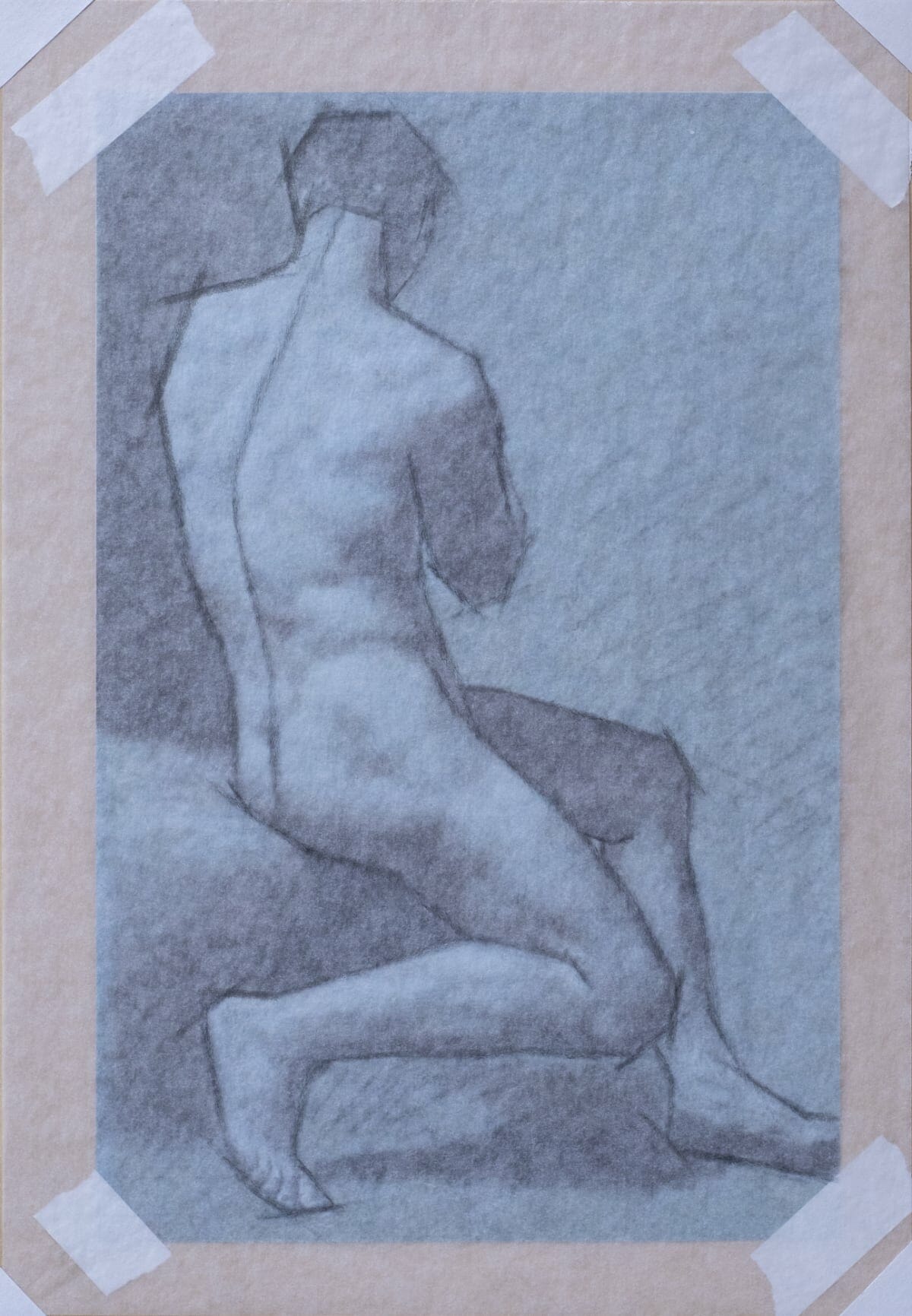
An instructor at the New York Academy of Art would former prescribe a tracing exercise. For those of u.s. struggling to draw the effigy, he would photocopy a master drawing and tell us to trace information technology. He told u.s. to pay particular attention to the curvature of the contour. Observe where information technology is more rounded, where it is flatter, and where it overlaps other contours. Consider the anatomy of the figure while you practise this and endeavor to understand why the contour changes the manner it does. Even draw the bones and muscles and try to relate them to what's happening on the surface. Then, once the tracing is complete, draw the figure once more – merely freehand this time, and at a larger calibration.
This exercise packs a one-two dial. Tracing an example helps yous learn about how a master artist represented the human figure. It focuses your attention in a style that merely looking doesn't quite accomplish. It'south the visual equivalent of reading aloud while studying for a examination. Reproducing that drawing at a larger scale provides an opportunity to practice, and also demands more input from you. Since a larger cartoon will crave more clarification than you lot tin can see clearly in the smaller reference, you'll need to improvise a trivial.
This kind of tracing exercise provides a way of closely studying another artist'southward work, and squaring information technology with your own knowledge and power. Information technology's an effective way to discover what yous need to work on when learning to draw the figure from observation, or even from imagination.
Benefit #3: Tracing Tin can Help You Empathise Foreshortening
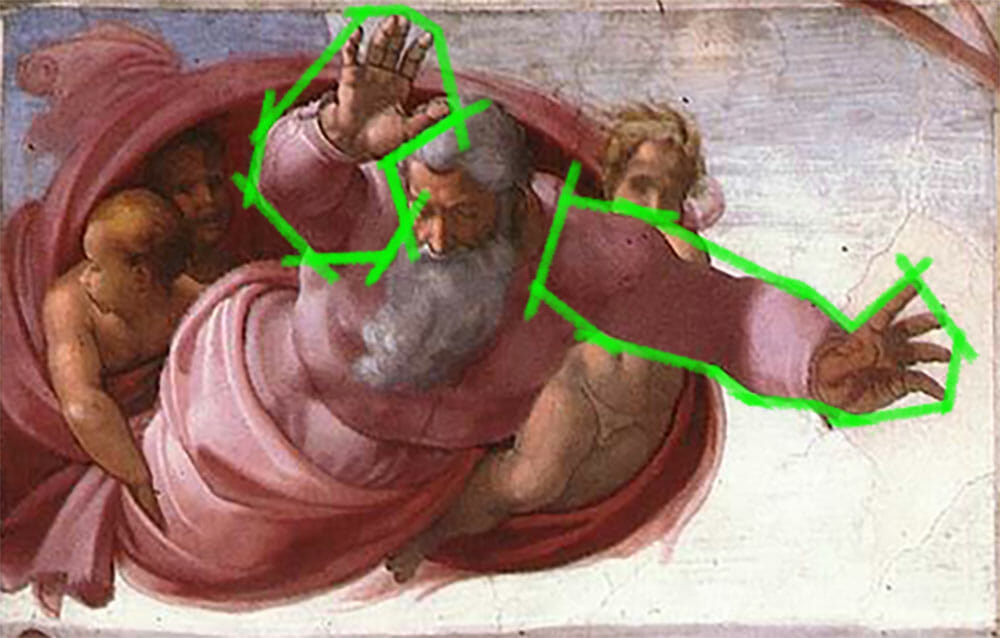
"Foreshortening" is the word nosotros use to describe how an object looks when viewed on end. For instance, if you were drawing a figure with an arm stretched out toward y'all, it would appear "foreshortened". Nosotros typically struggle with foreshortening because the outer shape of the object nosotros're drawing is not what we expect. We call up of limbs as being long and skinny and tend to draw them that style, even when they appear quite different in a foreshortened view.
Tracing can be an effective way to study the effects of foreshortening. Try cartoon an "envelope", or a rudimentary cake-in, on top of existing images of figures in various foreshortened views. Doing so can starkly illustrate the difference betwixt our expectations (limbs are long and skinny) and what nosotros're actually seeing. This kind of tracing can help free you from your preconceived, and incorrect, assumptions about what figures await like.
Benefit #four: Tracing Can Help Yous Understand Linear Perspective
Linear Perspective is a challenging field of study for students learning to describe. It often involves measurement and calculation and can seem a piddling too much similar math. Merely having at least a bones understanding of how perspective works is important for conveying 3-dimensional infinite in drawings.
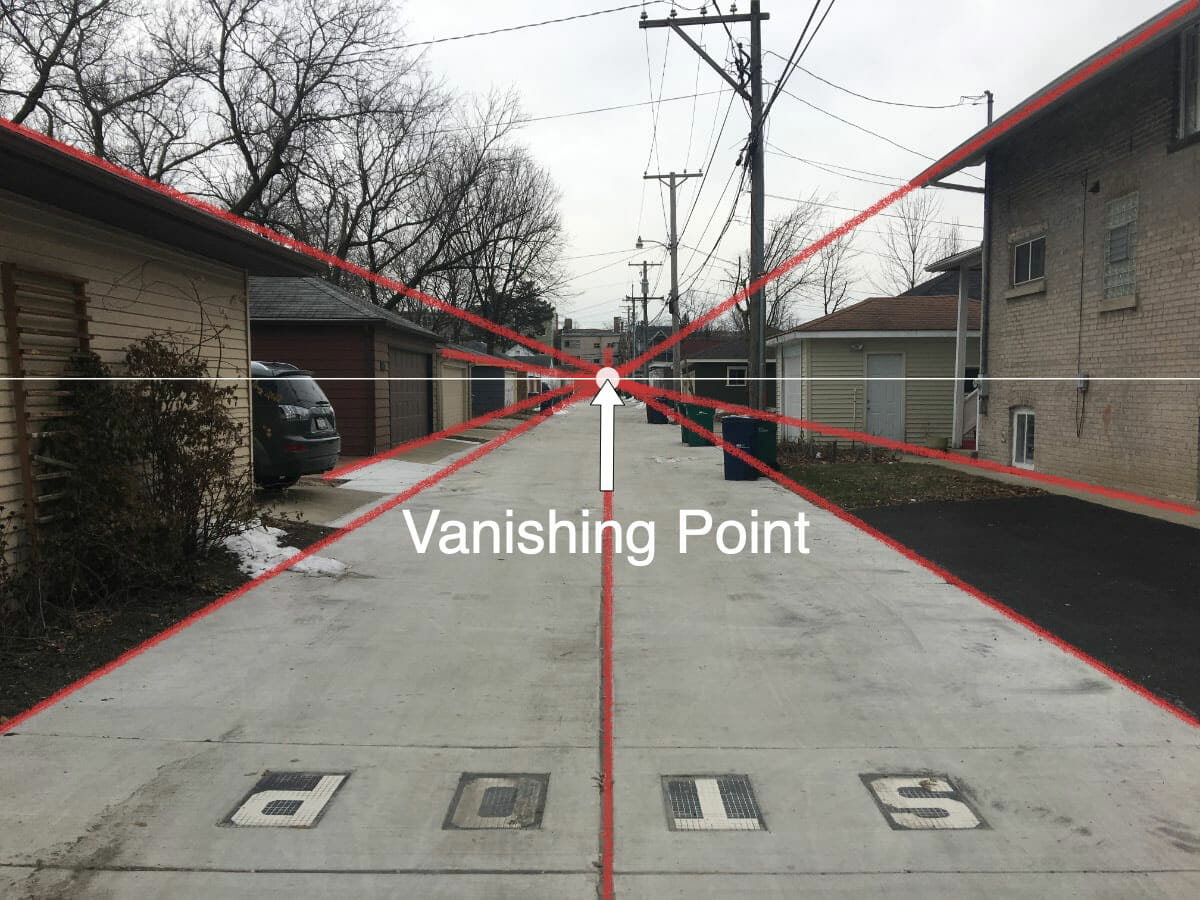
Tracing images can be an effective manner to explore how vanishing points work in perspective. A "vanishing point" is the hypothetical spot where parallel edges receding away from the viewer appear to converge. Whatsoever two or more than parallel elements in a picture show that recede back and away from the viewer volition share a common vanishing point. Students are often skeptical of this principle when drawing from life. Our brains merely aren't wired to find things like this. But tracing on top of a photograph to see where receding parallels intersect tin provide convincing evidence that vanishing points are existent and should exist taken seriously when cartoon. [bctt tweet="Can tracing teach you lot the fundamentals of drawing or volition it prevent you from reaching your total potential?" username="vitruvianstudio"]
The Pitfalls of Tracing
All of these instances bear witness how tracing can provide an effective mode to larn specific skills or concepts when learning to draw. But too much tracing can hinder your development. Here are some reasons why:
Pitfall #one: Tracing Doesn't Encourage You to Clarify Your Work
Cartoon well is ultimately virtually making skilful decisions. It's about observing your discipline advisedly, understanding why information technology looks the way it does and recreating that appearance on the page with an effective method. A successful cartoon is the production of analysis.
But tracing is ofttimes done mindlessly, with no analysis at all. Tracing doesn't require you to written report your subject or examine your choices. If y'all're just copying lines, you don't take to enquire questions or solve problems. When you trace, practise you consider the calorie-free source? Do you lot think about where the shadows are? Do yous retrieve about the underlying structure of your discipline? Are you thinking almost perspective? Do yous programme your composition? Do you consider alternatives to how the image you're tracing presents the subject? The answer to these questions is normally "no". In other words, when y'all trace you probably don't truly understand what you're drawing, or why you're cartoon it that manner. In our opinion, this diminishes the overall drawing feel.
Pitfall #ii: Tracing Can Result in Apartment Drawings
Paper is apartment. But when cartoon observationally, nosotros normally seek to create the illusion of volume and space on the folio. In other words, we want our drawings to announced three-dimensional. Achieving this kind of illusion requires you to think in a particular way about what and how you're drawing, because carefully the various iii-dimensional characteristics of your subject.
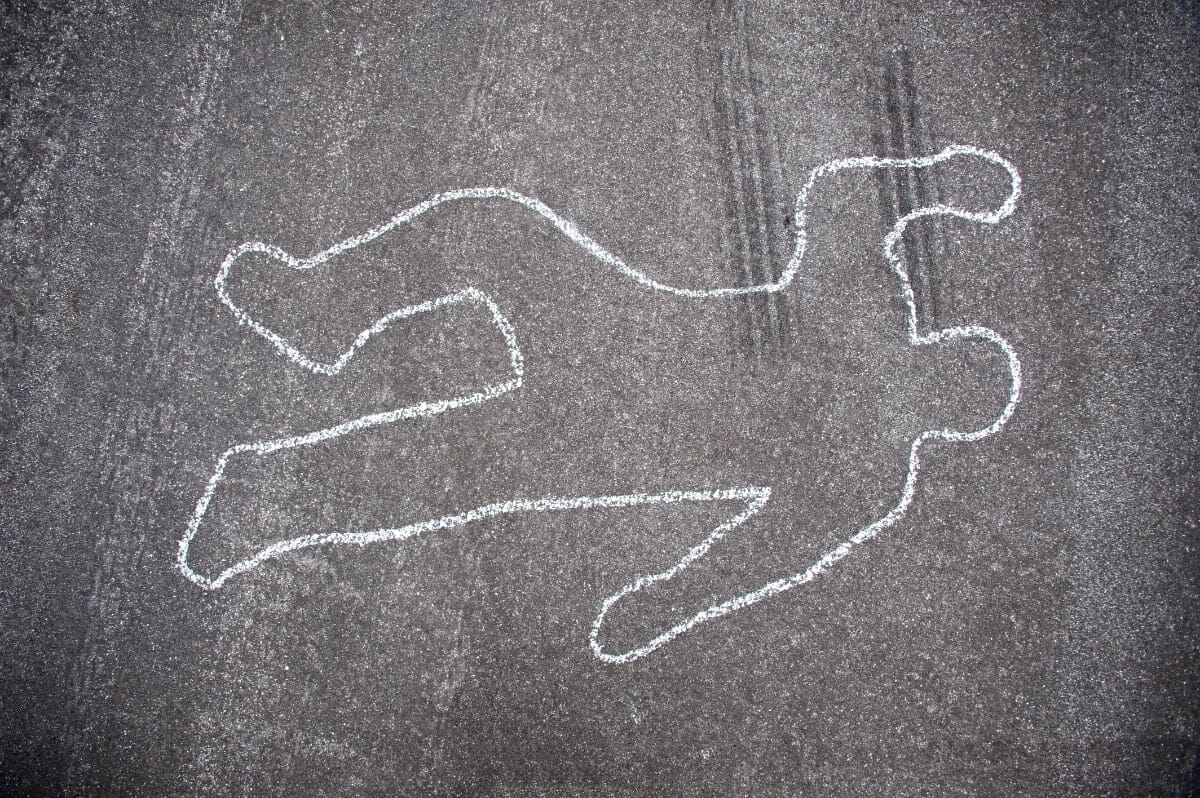
When most people trace, still, it usually results in a very apartment, cartoonish drawing. The trend is to trace contours with a continuous, unbroken outline that appears to sit uniformly on the same plane – like a chalk outline at a criminal offence scene. Even if the shapes are basically correct, it can be needlessly difficult to brand such a flat-looking drawing appear iii-dimensional and lifelike in the stop.
Pitfall #3: Tracing Can Become a Crutch
Tracing is one thing, only cartoon freehand is something else entirely. Being good at one doesn't automatically mean that you'll be good at the other. If you're not conscientious, y'all may find yourself clinging to tracing considering you're afraid to try drawing without it – or maybe you do try, and the results are disappointing, and you go dorsum to what feels better.
But in that location's no demand to be afraid of cartoon from ascertainment. While learning to draw freehand is challenging, and volition definitely push you out of your comfort zone, it will also empower you. Just like any skill, in that location are many small steps to take along the way, each of which provides its own reward.
Pitfall #4: Tracing Doesn't Guarantee Adept Results Anyway
We alive in a photographic age. Every day, we are bombarded with hundreds of images that are derived from some type of lens device, and nosotros tend to accept them as true. This is a land of mind known as beingness "camera conditioned".
Just photographs aren't truthful. Instead, they distort reality in countless subtle ways. Lens furnishings, exposure settings, compression artifacts, software biases and more can have a dramatic impact on how any photograph appears to us. Yet we still often bespeak to photographs as the ultimate manifestation of accurateness in imagery. "Wow! That drawing looks just similar a photograph!"
Tracing a photo may seem like the quickest route to accuracy in drawing, but if that's how you approach it, the distortions y'all fail to notice in your photograph reference will behave over into your artwork. That, combined with the tendency mentioned above to trace simplistically, in a 2-dimensional way, tin yield some pretty weird looking results. This tin be quite discouraging, specially considering that tracing is supposed to be easy.
Check out our Drawing Basics course to larn your central drawing skill gear up.
Pitfall #5: Tracing Doesn't Convey Your Unique Point of View
The final argument against tracing concerns who is actually in control of your artwork. Role of what makes drawing past observation hard is the sheer number of decisions you lot accept to make while developing a drawing from outset to terminate. The relative success of your work depends to a large extent on how yous choose to solve problems every bit they ascend.
But this is also what makes cartoon interesting and incessantly variable. Put x master artists in a studio together, all drawing the same thing, and you'll come across x different results. Each drawing volition capture the discipline faithfully, and nonetheless each 1 will be unique because it is the product of an private mind. Each artist will cull his or her own manner to tackle any given trouble, yielding different results. This is how individuality can shine through in artwork, even in the context of strict realism.
When you trace your work there is a huge number of decisions that yous don't get to brand. Things like scale, placement, proportion, structure, and perspective in your cartoon are all adamant past whatever paradigm you're tracing. With so many decisions made for you, you don't get to discover out what your drawing would look similar if you were to work those things out for yourself. In this way, tracing is restrictive. Instead of sharing what you see in your own unique way, you're copying some other perspective, whether that'due south the camera or someone else's eye.
Drawing past observation is ever an act of revision and editing, correcting and refining. We make our own decisions based on how nosotros perceive the subject and the page, which in turn creates an intimate view through the artist's eye. It'southward why nosotros enjoy looking at the diversity of piece of work in museums: to better understand the globe those artists occupied, equally they saw it, and to feel a kinship, an empathy, and to chronicle to the creative person's point of view and their place within history.
Our Final Give-and-take on Tracing
While nosotros admit that tracing has its place every bit a learning tool in specific contexts, we encourage you lot to claiming yourself to learn to describe without tracing. Being able to observe a bailiwick from life, and make decisions about line, shape, scale, placement, proportion, perspective and curvature is difficult… merely tin as well exist gratifying. While tracing can exist a tool in your toolbox, don't permit it to become the merely tool that you use.
Over to You lot
Do yous ever trace when making your piece of work? Why or why non? Let usa know in the comments below.
[content_upgrade cu_id="39863″]Don't forget to download this list of five ways tracing can help better your drawing skills.[content_upgrade_button]Click Here[/content_upgrade_button][/content_upgrade]

Source: https://vitruvianstudio.com/why-learn-to-draw-when-you-can-trace/
Posted by: evansthathe.blogspot.com
0 Response to "How Effecttive Is Tracing In Learning To Draw"
Post a Comment